博客/Past Simple 和 Present Perfect:什么时候用哪个时态
Past Simple 和 Present Perfect:什么时候用哪个时态

2026年5月01日

Vastny Languages 编辑部· 更新于 2026年9月10日

Past Simple 和 Present Perfect:什么时候用哪个时态

Past Simple 和 Present Perfect 是俄语学习者最常困惑的主题之一。在俄语里,我们可以说「я сделал」,并在不同情境中使用同一种形式。但在英语里,关键是我们是在看过去的具体时间点,还是看现在的结果。

Past Simple:有具体的过去时间

Past Simple 用于动作发生在过去,而且我们提到时间的时候:

  • I watched the film yesterday.
  • She called me last night.
  • We visited Rome in 2024.
  • He finished the task two hours ago.

时间提示词:yesterday, last week, in 2024, two days ago, when I was a child。

如果有明确的过去时间点,几乎总是用 Past Simple。

Present Perfect:重点是经验或现在的结果

Present Perfect 用于精确时间不重要,而经验或结果更重要的时候:

  • I have watched this film.
  • She has called me.
  • We have visited Rome.
  • He has finished the task.

我们不说具体什么时候。我们想表达的是:这件事已经发生了,而且这对现在很重要。

对比一下

I lost my keys yesterday. — 我昨天把钥匙弄丢了。

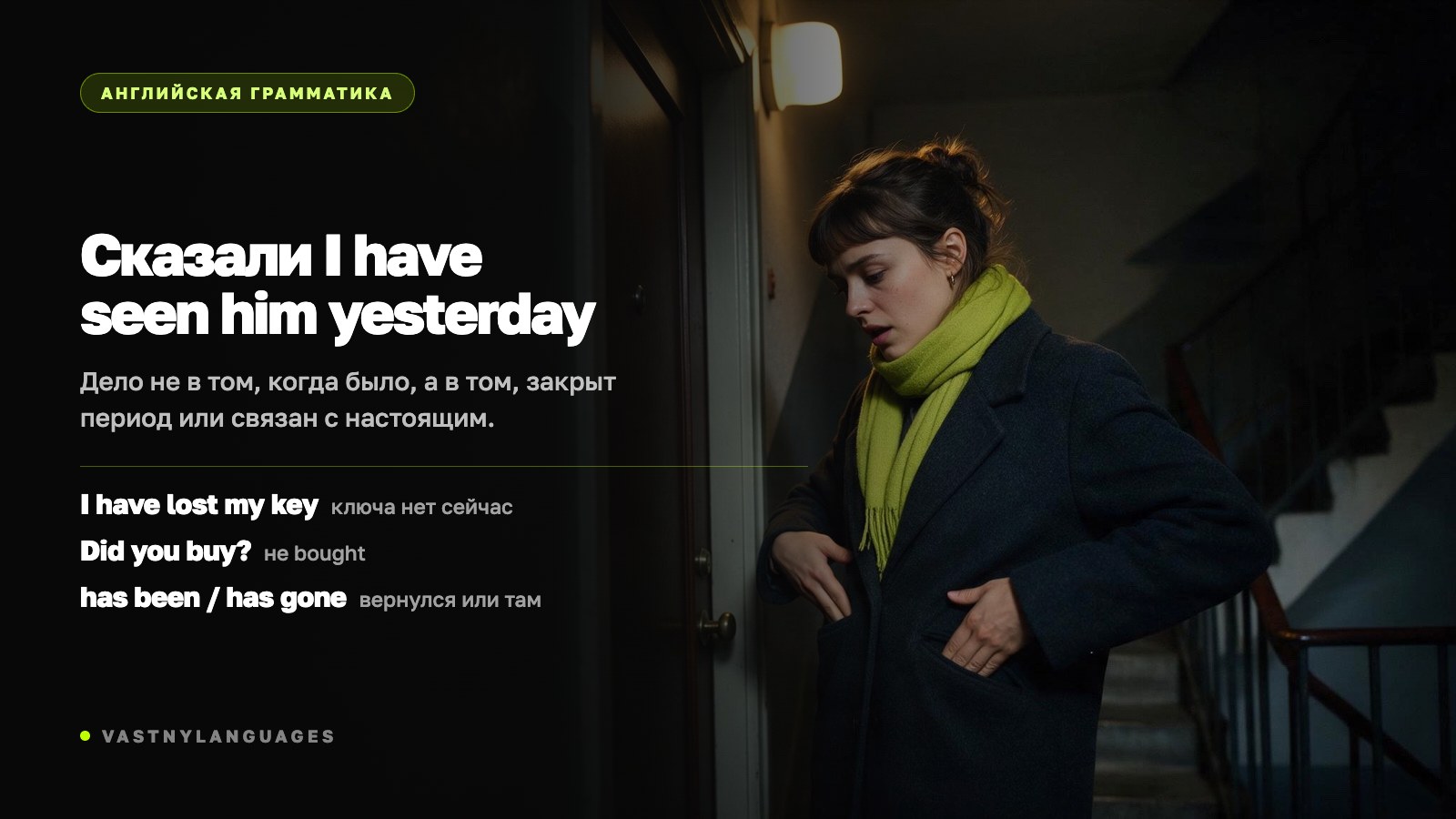
I have lost my keys. — 我把钥匙弄丢了,所以我现在没有钥匙。

She went to London in 2022. — 她在 2022 年去过伦敦。

She has been to London. — 她有去过伦敦的经历。

We finished the project on Monday. — 我们星期一完成了这个项目。

We have finished the project. — 现在项目已经完成了。

常见错误

不能说:I have seen him yesterday. 如果有 yesterday,就要用 Past Simple:I saw him yesterday.

但可以说:I have seen him before. 这里没有明确时间,重点是经历。

记忆方法

把卡片分成两栏:

Past Simple:

  • yesterday;
  • last year;
  • in 2020;
  • two days ago.

Present Perfect:

  • already;
  • just;
  • never;
  • ever;
  • before;
  • yet.

然后加入短语,不要只背规则。

最重要的一点

Past Simple 回答的是“过去什么时候发生的?”。Present Perfect 回答的是“我现在有什么结果或经历?”。你重复的配对例子越多,就越不会想直接从俄语硬翻过来。

Practise right after the article

Do not just read — remember the words with cards

Try a few cards here. Then sign up to save lists, continue reviewing, and return to difficult words.

Try 20 cards right here

A quick way to try spaced review: see a word, reveal the answer, mark difficult cards, and continue in Learn.

Loading cards…

更多文章

2026年4月30日

如何在不死记硬背语法规则的情况下学习英语语法

语法常常被描述成一堆表格、例外和冗长规则。于是很多人会把它“留到以后”,或者试图一下子把所有时态都学完。结果是越来越累,却并没有真正提高更准确地说和写的能力。 学习语法,最好把它当成表达意思的工具。不是“因为规则所以用 Present Perfect”,而是“我想表达我已经有过这段经历”。不是“情态动词 should”,而是“我想给出一个委婉的建议”。 先…

2026年4月29日

更该学什么:单词还是现成短语

最好两者都学,但用途不同。单个单词有助于扩大词汇量。现成短语则能帮助你更快地说和写,而不用从俄语逐字翻译。 如果你只学单词,可能知道意思,却会在搭配上出错:do a mistake 而不是 make a mistake,listen music 而不是 listen to music。如果你只学短语,读新文本和自己组织表达就会更困难。 什么时候学单词 当你…

2026年5月01日

Present Simple 和 Present Continuous:用简单的话说有什么区别

Present Simple 和 Present Continuous 经常被混淆,因为这两个时态都和现在有关。区别不在“现在”这个词,而在于我们怎么看这个动作:把它看成事实,还是看成正在进行的过程。 如果记住这个思路,规则就会清楚很多。 Present Simple:事实、习惯、时间表 Present Simple 用在动作重复发生或表示事实的时候: I…

2026年8月04日

Much, many, and a lot of: how do you choose?

A simple guide to much, many, and a lot of: what you can count, what you cannot, and why a lot of fits most everyday sentences. Examples with clear meaning and a short quiz.

您的 Cookie 选择

我们使用必要 Cookie 来运行网站。分析和营销技术仅在获得您的许可后启用。 Cookie 政策