May 01, 2026
Vastny Languages editorial team· updated May 19, 2026
English Food Vocabulary: What to Learn First
Food is needed by almost everyone: when traveling, in cafés, in shops, in messages, and in everyday conversations. But it’s better to learn it not as a long list of a hundred items, but in groups that help you speak right away.
Start with the words that appear most often in real-life situations.
Basic foods
- bread — bread;
- rice — rice;
- pasta — pasta;
- meat — meat;
- chicken — chicken;
- fish — fish;
- cheese — cheese;
- eggs — eggs;
- vegetables — vegetables;
- fruit — fruit.
Add phrases right away: fresh bread, grilled chicken, boiled eggs, fruit salad.
Drinks
- water — water;
- tea — tea;
- coffee — coffee;
- juice — juice;
- milk — milk;
- soda — soda.
Useful phrases:
- still water — still water;
- sparkling water — sparkling water;
- black coffee — black coffee;
- green tea — green tea.
In cafés and restaurants
- menu — menu;
- bill — bill;
- order — order;
- waiter — waiter;
- table — table;
- dish — dish;
- dessert — dessert.
Ready-made phrases:
- Can I see the menu?
- I would like coffee.
- Can I have the bill?
- Is this dish spicy?
- Do you have vegetarian options?
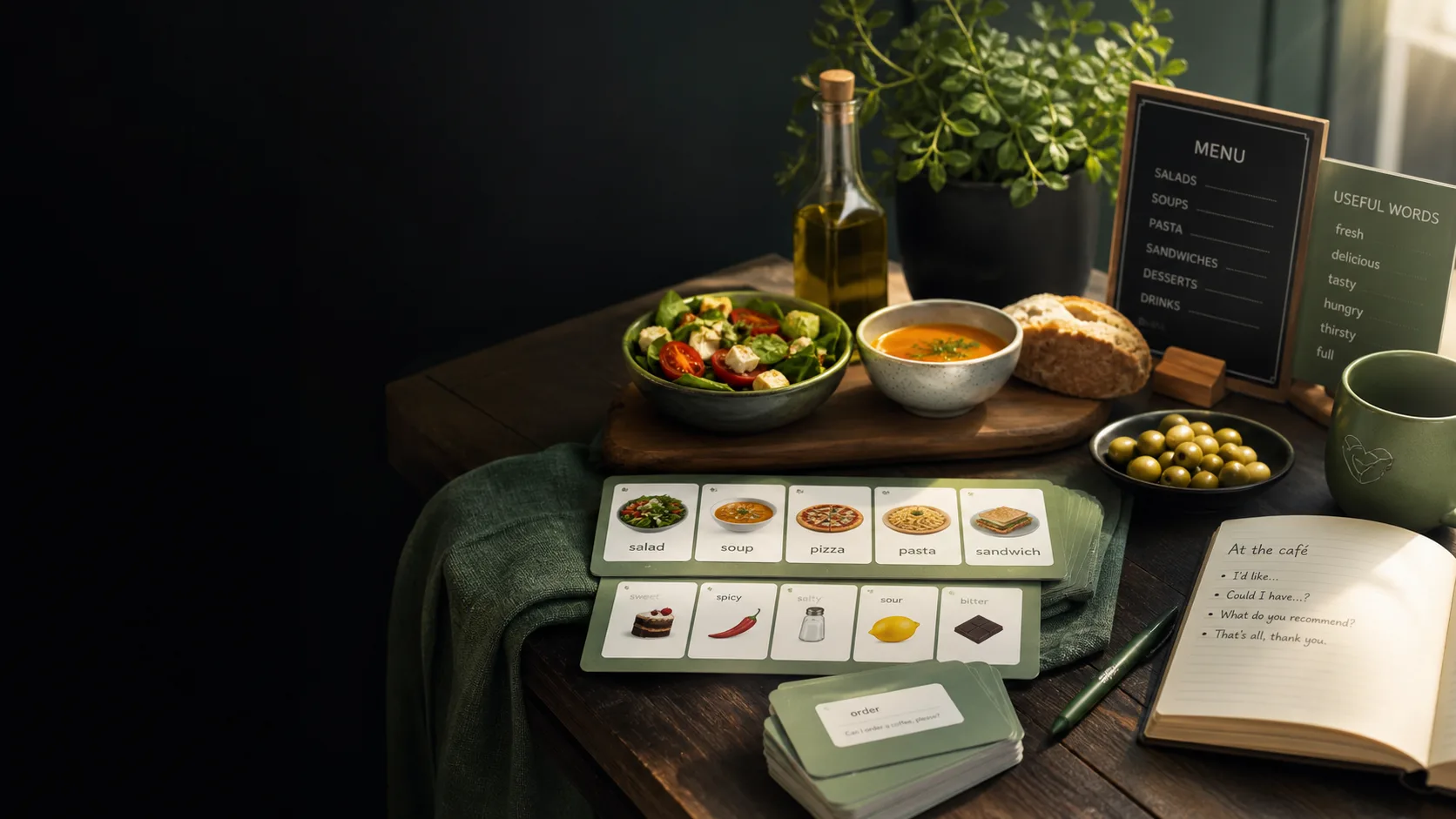
Taste and description
- tasty — tasty;
- sweet — sweet;
- salty — salty;
- spicy — spicy;
- sour — sour;
- bitter — bitter;
- fresh — fresh;
- hot — hot;
- cold — cold.
Don’t learn only the translation. Make pairs: spicy soup, fresh salad, sweet tea, cold water.
How to practice
Open your fridge or a food delivery menu and name 10 items in English. Then add a description: fresh vegetables, hot tea, grilled fish. After that, make 3 sentences:
- I like spicy food.
- I don't drink soda.
- I usually have eggs for breakfast.
The main point
Food becomes useful very quickly if you learn not only items, but also phrases for ordering, describing taste, and everyday habits. Add collocations to your flashcards, not an endless list of rare dishes.